
Your period, your business. Period. Why is knowing about your period so important? Well, it’s the circle of life, my friend. Or the circle of your menstrual cycle. Yea, let’s say that. Once upon a time there was little someone could say to even make me care about knowing my period. Honestly, still now I wonder. But at the end of the day, how I feel is tied to my cycle. How I feel determines how I act. And how I act contributes to how I feel. You feel where I am going with this? Your period is a sign that something is happening, but there are other silent signals throughout your period that you might be missing. If you knew these signals, knew what to do, you just might make your day a little bit better. 1% better every day, right? Just kidding I’m not here for that. That is completely different to what we’ll dive into, and distraction is my downfall but let’s try stay on track.
Let’s get this straight: this isn’t a ‘period power’ e-book or any kind of notion that puts periods on a pedestal. It’s black and white. Your body has a menstrual cycle consisting of hormones that drives the way you feel and therefore act. Shouldn’t that be important for you to know?
Who am I to say?
This isn’t about me, it’s about you, however, I’m just a girl who probably thought about periods (& the menstrual cycle) like you once. I’m not trying to make you all woo-woo and dive deep into a world of periods and cycles. The aim of this is: for you to know just a little bit more about how your body works and how it affects your day-to-day.
Basics
A menstrual cycle typically ranges from 21 to 35 days. There are four phases of your menstrual cycle: Menstrual, Follicular, Ovulation, and Luteal. Your period is the celebrity of your cycle and starts it off.
The cycle is a beautiful thing (stay with me here), your body goes through a journey of preparing for possible pregnancy, and if the egg is unfertilised (= no baby), you get your period.
What is the Menstrual Cycle?
Think of the menstrual cycle as your body’s monthly to-do list for reproduction. It starts on the first day of your period and ends the day before your next period begins. Hormones like estrogen, progesterone, follicle-stimulating hormone (FSH), and luteinizing hormone (LH) act like conductors, signaling your ovaries to release an egg and your uterus to build or shed its lining. If pregnancy doesn’t happen, the cycle resets with a period. And we already know it’s not just about reproduction - it affects energy, mood, and physical performance.
Before we get into the actual grit of what the menstrual cycle is, we’ll first need to understand what the key hormones are, what they do and how they affect us.
Stick with it, it’s important to know these to understand your menstrual cycle as a whole.
The menstrual cycle is driven by four key hormones, let’s assume they’re our cast in our overall movie (the menstrual cycle): estrogen, progesterone, follicle-stimulating hormone (FSH), and luteinising hormone (LH). These hormones act like messengers, coordinating your ovaries, uterus, and brain to prepare for a possible pregnancy each month.
Estrogen is the Oscar-winner, she’s the energy booster that wins every time. Estrogen is a hormone mainly produced by your ovaries (and a bit by fat cells and adrenal glands). Think of it as your body’s “glow-up” manager, giving you energy and confidence. Estrogen has a big role building up the uterine lining (endometrium) during the follicular phase to prepare for possible pregnancy. This is essentially the opposite of what your period is. Estrogen boosts mood, energy and skin radiance which is especially noticeable during the follicular phase and ovulation phase. Estrogen triggers the LH surge that leads to ovulation. When she’s active, she wants everyone to know: Estrogen peaks in the follicular phase (days 1-13) and ovulation (day ~14), drops during menstruation and late luteal.
You know how there’s that one person that everyone just loves because they always make you feel good? That’s Estrogen! Estrogen is the girl that everyone likes - she makes you feel ready for workouts, social events or create projects.
Progesterone is another key player. Think of the one socialite that they say, if you’ve been on her show, you made it. Progesterone is her. Think of progesterone as the calming prepper. Progesterone is produced by the corpus luteum (a temporary gland in the ovary after ovulation). It’s like your body’s “chill pill,” getting things ready for a potential baby. Progesterone stabilises the uterine lining during the luteal phase to support a fertilised egg. Remember the show host? She’s calming and relaxing, same as progesterone. However, its drop can cause PMS symptoms like irritability or cravings. Fortunately, progesterone prevents uterine contractions until menstruation. When progesterone is active, it rises in the luteal phase (days 15-28), drops if no pregnancy occurs, triggering a period. Progesterone’s calming effect supports self-care routines (e.g., journaling, pilates). Connect progesterone’s role to self-care days, with the Halo Cup handling pre-period flow stress-free.
Now try remembering this one: Follicle-Stimulating Hormone (FSH): The Egg Coach. FSH is like a personal trainer for your eggs, picking the star player for ovulation. FSH is made by the pituitary gland in your brain. It’s like a coach cheering on your ovaries to get eggs ready for the big game (ovulation). FSH stimulates 10-20 follicles (egg-containing sacs) in the ovaries to grow during the follicular phase and helps one follicle become the dominant one that releases an egg. When FSH is active, it rises early in the follicular phase (days 1-10), peaking just before ovulation. FSH sets the stage for ovulation, which your audience might notice as a high-energy, confident phase which is ideal for Halo Cup’s secure fit during active moments. Tie FSH to the follicular phase’s energy.
The last hormone to remember is the luteinising Hormone or LH, AKA: the Ovulation Trigger. LH is also made by the pituitary gland, like FSH. It’s like the starting gun that signals “Go!” for ovulation. LH surges mid-cycle (triggered by high estrogen) to make the dominant follicle release its egg during ovulation. It helps form the corpus luteum, which produces progesterone. When LH is active, it peaks sharply around day 14, just before ovulation. LH’s role in ovulation aligns with your peak confidence and social vibe. LH is like the green light at a race- it tells the egg it’s time to launch.
The Four Phases: Breakdown and Meaning
Now that we’ve discussed our cast, let’s breakdown the movie. There are four phases that make the movie: menstruation, follicular, ovulation and luteal phase.
We’ve talked about the menstrual cycle lasting about 28 days. Your menstrual phase marks days 1-5. Next is the follicular phase. This one is a bit funny because it actually overlaps the menstrual phase lasting from about day 1 to 13. Next, the beloved ovulation phase days 13-14. The luteal phase is the longest, lasting from days 15-28, or the second half of your cycle.
Let’s break down each phase. Timeline can vary person to person.
Menstrual Phase
Days 1-5 - Your inner Winter
Your menstrual cycle begins the day you get your period. As we’re aware, the menstrual cycle is a loop of your body prepping for pregnancy. When you get your period, this is your body telling you pregnancy has not occurred which means the uterus sheds its lining (endometrium). This lining, along with blood and tissue, exits through the vagina. Hormone levels (estrogen and progesterone) are low, triggering the shed. During this phase, you might feel tired, crampy (because of uterine contractions), or bloated.
Energy is often lower, and some experience mood dips. Rest and reflection can be beneficial around this time. Pair the Halo Cup with cozy self-care (e.g., a hot water bottle for cramps).
The Follicular Phase
Days 1-13 - Your inner Spring
The Follicular phase (AKA your inner spring) starts on day 1 of your period and overlaps with menstruation for a few days. FSH stimulates your ovaries to grow 10-20 follicles (tiny sacs with eggs), but usually only one becomes the dominant egg. Estrogen rises, thickening the uterine lining to prepare for a potential pregnancy. Energy and mood lift as estrogen climbs, especially post-period. You might feel more creative, social, and motivated for workouts. This is a high-energy phase; perfect for running, weightlifting, or social events.
The Ovulation Phase
Days 1-13 - Your inner Summer
The crowd favourite. A spike in LH (triggered by high estrogen) causes the dominant follicle to release a mature egg from the ovary. The egg travels down the fallopian tube, ready for fertilization if sperm is present. This is your fertile window (up to 5 days before and 1 day after ovulation). You’re at your peak here; confident, energetic, and often glowing. Some feel mild pelvic twinges (mittelschmerz) or notice cervical mucus changes (clear, stretchy). Embrace your social butterfly vibe for events or dates.
The Luteal Phase
Days 1-13 - Your inner Autumn
The ruptured follicle becomes the corpus luteum, producing progesterone to maintain the thickened uterine lining for a possible pregnancy. If no fertilization occurs, progesterone and estrogen drop, signalling the uterus to shed (next period). The luteal phase takes a big chunk of your cycle; it’s the entire second half of your cycle! Early luteal feels productive, but as hormones dip, you might experience PMS (e.g., irritability, cravings, bloating). Energy may wane, and some feel sluggish. This phase can challenge your active routine so listening to your body is extra important during this time to manage PMS.
Focusing on strength training or low-impact activities can be helpful and prioritising self-care is a must!
Key Points to Remember
- “Normal” cycles range from 21-40 days: the textbook answer being 28. Stress, diet or conditions like PCOS can affect your cycle length
- Hormone drive everything. Estrogen boosts energy and mood (follicular, ovulation), while progesterone calms and prepares (luteal). Low hormones trigger periods
- It’s Not Just Physical: The cycle affects mood, energy, and performance, which is why cycle syncing (aligning activities with phases) is empowering
Journal Prompts for Each Phase
‘Your mentality is your reality’ - Suzy Kassem
Journaling is not only for when you’re experiencing inner turmoil. Journaling can unlock patterns you didn’t know existed- patterns driven by your hormones. As we’ve uncovered, the daunting luteal phase is when your energy levels begin to lower to a pit. Or chasm. And this phase lasts the whole second half of your cycle. Journaling can help you uncover your patterns in mood, energy levels and overall state at different points of your cycle. You might learn something about yourself.
Menstrual Phase (Inner Winter): Low energy, reflective vibe
Prompt: What’s something I can let go of this cycle (stress, a bad habit)? How can I nurture myself today?
Why: Low estrogen/progesterone encourages introspection
Follicular Phase (Inner Spring): Creative, upbeat mood. Remember: your follicular phase overlaps your menstrual phase.
Prompt: What new idea or goal am I interested to explore? How can I channel my energy this week?
Why: Rising estrogen boosts motivation
Ovulation Phase (Inner Summer): Confident, social peak
Prompt: What makes me feel unstoppable right now? How can I use my new-found energy boost to my advantage?
Why: Estrogen/LH surge fuels boldness
Luteal Phase (Inner Autumn): Introspective, PMS possibly occurs
Prompt: What’s *actually* making me stressed? What’s triggering my cravings? What small things can I do to create calm?
Why: Dropping progesterone can cause mood dips
Real chat...
Tampons, pads, menstrual cups- why is choosing a sanitary product important to me?
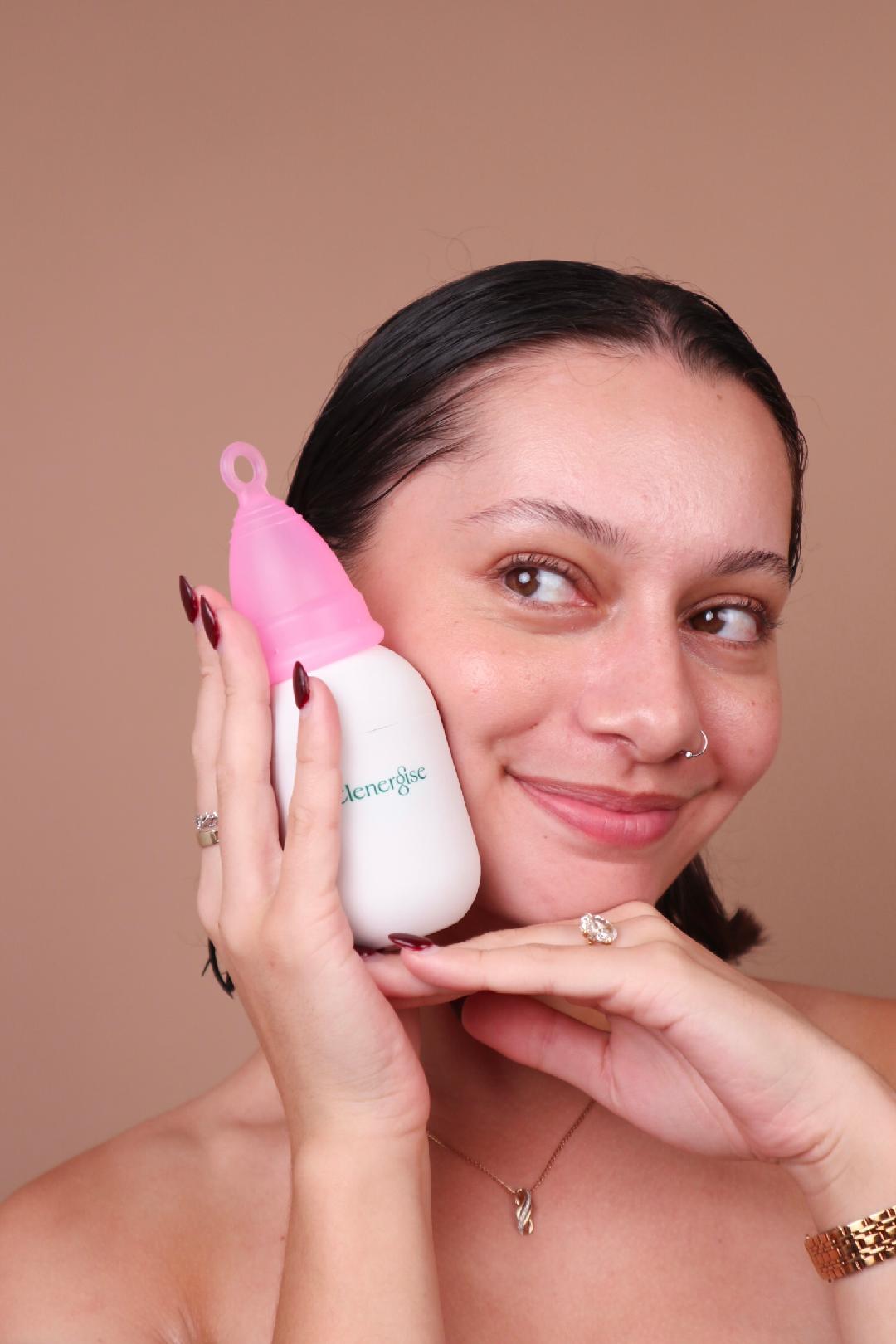
I don’t know what your story is, but mine was I used what was given to me. I used what was the ‘norm’ or the automatic answer. Pads and tampons. As much as I would love to say ‘being eco-conscious’ was my reason for switching sides, it wasn’t. I love a luxury item, and 'reusable' doesn't necessarily scream luxe. We’re all the main character of our own lives so for me, the idea behind the efficiency of a menstrual cup when compared to pads or tampons, is what sold me. Leak-free? Wearable for up to 12 hours? No more late-night supermarket visits for just pads and tampons (I know no one cares, but I was an embarrassed 18-year-old buying these things). Now that I’m a bit older, I care about what I put in my body. I care about getting the water filter. I think about the pesticides sprayed on my veggies. I don’t want the microplastics from plastic containers when I can swap to glass. Little changes make a big impact. Money savings is also very important to me. I’ve saved over $1000 in what would have been spent on pads and tampons probably in the last five years. That is a return flight to Thailand for me. It could be a coffee machine for the coffee lovers.
We all have our reasons, and I implore you to try the options. Find out what works best for you. And thank me later <3